
Fitchburg Directory Holdings
The Massachusetts State Library holding list is the best source for checking whether a particular Fitchburg directory year survives. It records one 1848 volume, runs for 1871-1872 and 1876-1885, a much longer 1887-1944 run, and a 1967 volume. Those dates are holdings, not proof of an uninterrupted annual sequence. The State Library lists Fitchburg suburban volumes separately, so they should not be folded into the main city run. Start by writing down the exact year wanted, then ask for that volume or its stated format.
| Collection | Years | Where Held | Access |
|---|---|---|---|
| Fitchburg city directories | 1848; 1871-72; 1876-85; 1887-1944; 1967 | Massachusetts State Library | Holding list, catalog, and onsite request |
| Fitchburg suburban directories | Selected years, 1906-1977 | Massachusetts State Library | Separate suburban coverage |
| Research Publications microfilm | c. 1980-84/[199-?] | FamilySearch Catalog | 19 reels and 34 fiches; access can require a center or login |
| Local history and reference material | Exact local run not published | Fitchburg Public Library | Reference staff, copies, and interlibrary loan |
| Directories and family files | Item-specific holdings | Fitchburg Historical Society | Public hours or appointment; paid genealogy help available |
Use the State Library genealogy guide for the wider archive and census context. It points researchers toward directories, vital records, church and cemetery transcriptions, the Massachusetts Archives, and local repositories. A missing year should prompt a catalog or reference request, not an assumption that the household left Fitchburg.
Fitchburg Directory Years at State Library
Fitchburg directory research has a clear, but uneven, documentary spine. The first listed volume is 1848. Later shelves include the 1871-1872 and 1876-1885 sequences, then the long 1887-1944 set, followed by a 1967 volume. The format notes in the State Library PDF matter because some entries are marked for microfilm or another format. Confirm the exact item before arranging a visit or a request.
- 1848: the earliest verified Fitchburg directory holding in the State Library list.
- 1871-1885: two distinct runs, with a break between 1872 and 1876.
- 1887-1944: the substantial listed run, with format notes attached to some entries.
- 1967: a later standalone listed volume, not evidence of complete postwar coverage.
Directory publishers and formats can change over time. A volume may contain an alphabetical list, a business portion, ads, or a street/numerical section, while another year may not. Treat the title page, printer or publisher line, edition date, and page number as part of every citation. That detail makes a later library photocopy request much more precise.
Fitchburg Suburban Directory Runs
The State Library records the suburban series apart from the Fitchburg directory holdings. Its listed years are 1906-1907, 1910, 1918, 1922, 1926-1927, 1929-1932, 1938-1939, 1942-1943, 1953, 1957, 1961, 1963, 1965-1966, 1969-1970, 1975, and 1977. That list helps fill selected gaps, but it is not the same geographic product as the city sequence. Record the series title as well as the year when comparing results.
Suburban coverage can be useful when a street, postal label, or city boundary complicates a search. It should be checked beside a deed's town field, an old map, and the directory's own street guide. A historic address near the Fitchburg edge may use a different label in a directory than it does in a current municipal search. The published directory tells what the compiler printed, not necessarily a modern legal boundary.
Note: A directory gap is a collection fact, not proof that a person or household disappeared from Fitchburg.
Reading a Fitchburg Directory Entry
A Fitchburg directory generally begins with an alphabetical resident and business list, then may supply a street or numerical guide. The exact marks must be read from the selected volume's abbreviation key. Do not quote a sample person from a scan that has not been inspected. Instead, capture the page, volume, and year along with each printed field. Names may appear as initials, married names, widow notations, or shortened street names, so spelling alone is rarely enough to identify a household.
| Name | Surname, given name, initials, and any relationship notation printed in that volume. |
|---|---|
| Residence | Street number and street name, plus a residence or room notation when the directory uses one. |
| Household clue | Spouse, widow, estate, or other notation where the entry actually prints it. |
| Work or firm | An occupation, employer, firm, or trade if included by the publisher. |
| Cross-reference | Street-guide entry, business listing, telephone, page number, and the volume's abbreviation key. |
- Criss-cross directory
- A reverse section arranged by street and number rather than alphabetically by name.
- Householder index
- A listing that identifies the named person attached to a numbered address; it may omit other people at the address.
- Abbreviation key
- The volume's printed explanation of its shorthand. Photograph or transcribe it before interpreting a notation.
For a former address, the street guide is the historical address-to-name tool. It does not establish that every person there was listed, and it should not be read as a complete household roll.
Fitchburg Directory Access During Renovation
Fitchburg Public Library's reference page says that its local-history collection is in storage during the Wallace Library renovation. The temporary service location is 166 Boulder Drive, Suite 108, and the reference desk can provide factual help, deeper assistance in person, interlibrary loan, and guidance with census materials. Copies with an exact citation can be requested by phone, fax, email, or mail. For more involved local research, the library directs people to the Historical Society or a fee-based researcher.
The library building project page documents the renovation and expansion that affect physical access.
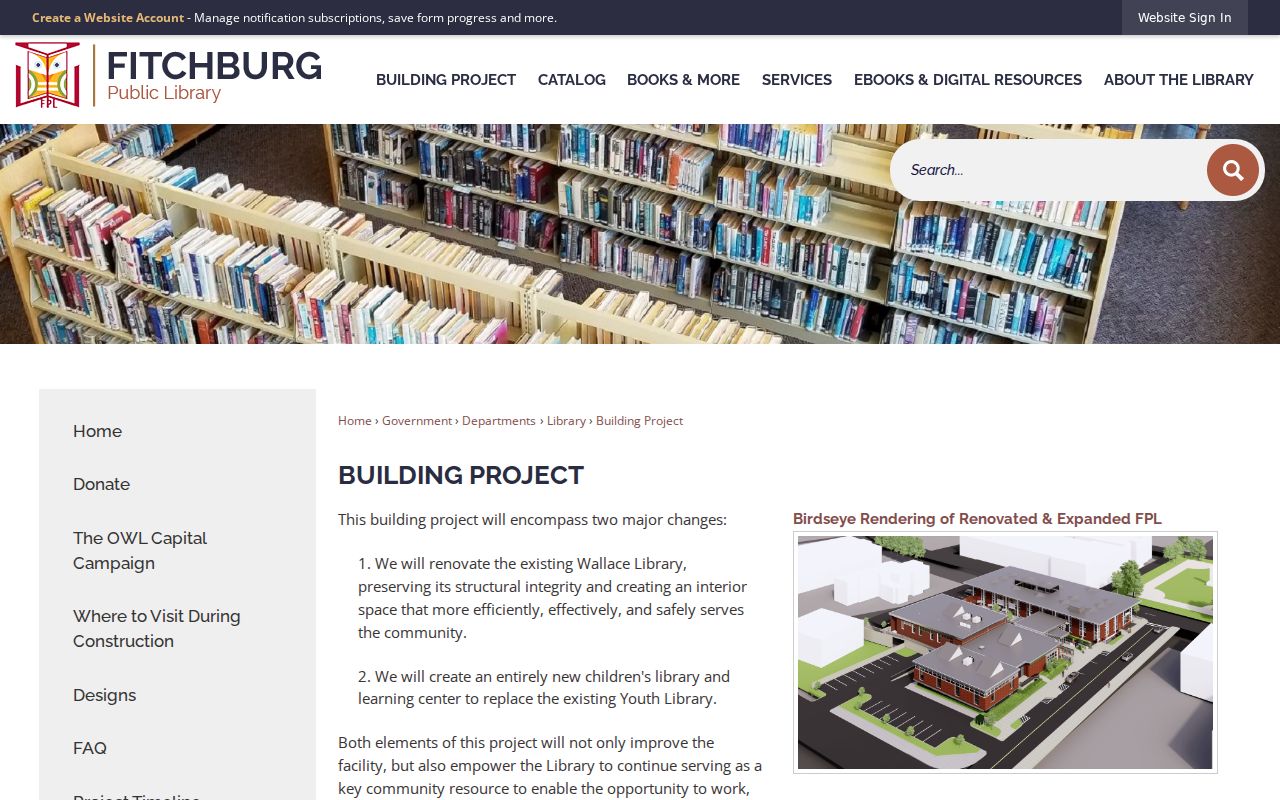
Because the building work changes service arrangements, confirm the current route before planning a directory visit.
The library reference and local-history information identifies the material still available through staff and its research channels.
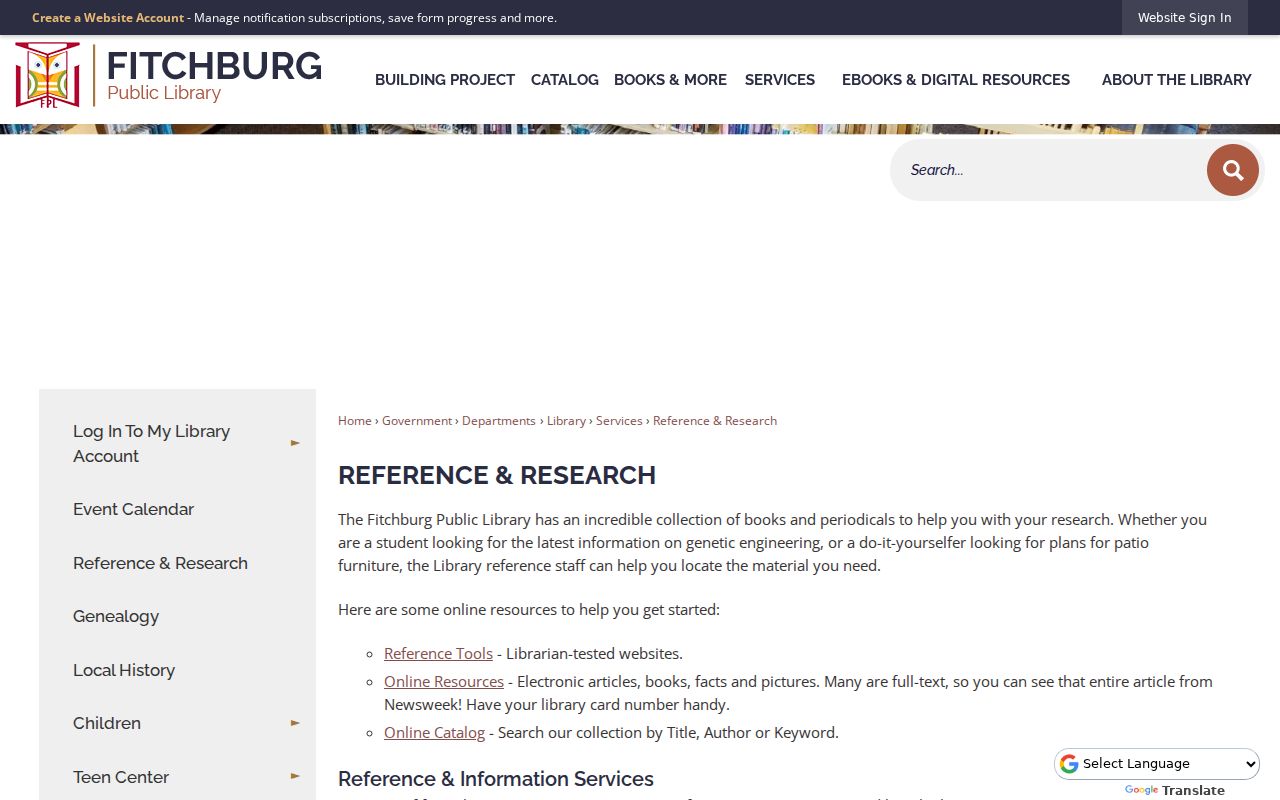
Its Sentinel microfilm remains available even while the local-history collection is stored, which makes the library a useful follow-up when a directory entry needs a dated notice or obituary context.
Fitchburg Directories and Local Newspapers
Fitchburg Public Library preserves Sentinel and Sentinel & Enterprise microfilm from 1839 to the present. It also provides the Finnish-American Raivaaja digital archive for in-library use from 1905 to 2009. These are not duplicate records. A directory offers a dated address or printed description, while a newspaper can add an obituary, organization notice, business advertisement, event, or a variant spelling that helps distinguish people with the same surname.
Search names with initials, married or maiden variants, accents or anglicized forms, street names, neighborhood names, and the form of a firm printed in the directory. The library also identifies yearbooks, Digital Commonwealth images, Archive.org books, census help, and an architectural and historical inventory. Use the directory's page and year when asking staff for a copy so the search is tied to a verifiable entry.
Note: The official library page does not publish a complete obituary-index year run, so request confirmation for any claimed index coverage.
Fitchburg Historical Society and Old Records
The Fitchburg Historical Society, organized in 1892, operates the Arthur Lowe Library and the Crocker Center for the Study of Fitchburg History. Its published public hours are Monday and Tuesday from 10 a.m. to 4 p.m. and Wednesday from 10 a.m. to 6 p.m. Appointments are available at 978-345-1157. The collection includes local directories, Sentinel newspapers, photographs, scrapbooks, manuscripts, family genealogies, postcards, industrial files, and railroad and Civil War material. Visits are free, donations are welcomed, and genealogy help can be requested for a fee.
The Historical Society holdings and access information show the research setting available beyond a web search.
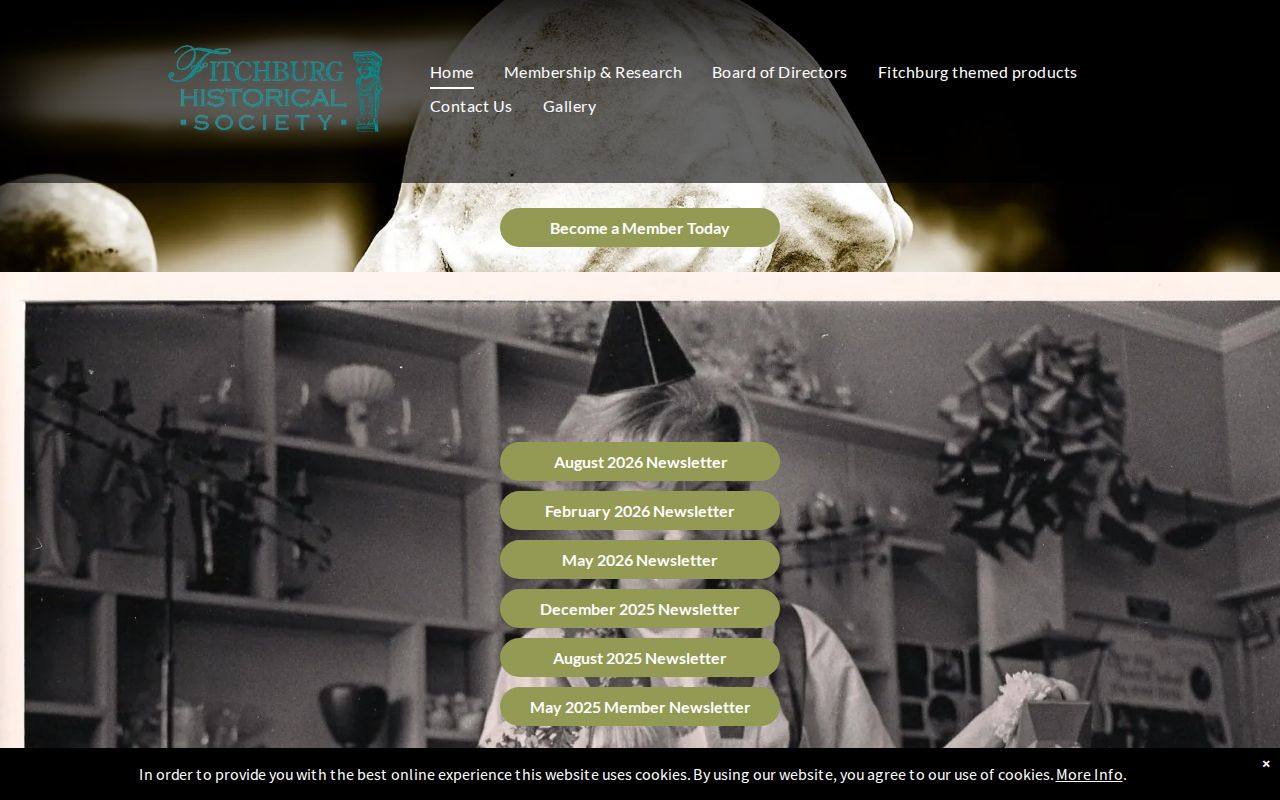
Its Arthur Lowe Library is a practical fallback when a directory citation needs family files, photographs, or local newspaper context.
For earlier town material, the FamilySearch catalog for Walter A. Davis's Old Records of the Town of Fitchburg, Massachusetts identifies eight indexed volumes in book, microfilm, and digital-image forms. The catalog lists films 864137, 903682, 864138, and 864139. Those town and vital-record materials are a pre-portal bridge, not a substitute for reading the selected directory volume.
The Old Records catalog entry identifies the available formats and indexing paths.
Pairing town records with a dated directory entry can narrow a family line without treating either source as a complete account of a household.
Tracing Fitchburg Directory Households
Use each directory as a dated snapshot, then test it against the next available volume and a released census schedule. Federal census schedules from 1790 through 1950 are available under the 72-year release rule. The census is taken on its enumeration date and can reflect old town boundaries, but it can supply household composition, ages, and relationships that a directory usually does not print. A name's absence may reflect a move, death, a changed spelling, or the directory's own listing practice.
- Start with the newest verified Fitchburg entry and record its exact name, address, page, volume, and any printed notation.
- Check the next earlier and later available directories, searching both the surname and the street guide.
- Compare the nearest released census year for household members, age, and relationship information.
- Use a newspaper, cemetery inquiry, probate file, or town record only to test the dated trail, not to fill a gap by guesswork.
A family moving between Water Street, Mechanic Street, West Fitchburg, Cleghorn, or downtown may appear under different neighborhood descriptions in supporting material. Those places offer useful research context, not proof of a person's background. Match a name using the address, spouse or relationship notation, printed work detail, and census age whenever the evidence allows.
Fitchburg Directory Recordkeeping Story
Fitchburg became a separate town in 1764 and a city in 1872. The railroad reached Fitchburg from Boston in 1845, and the North Nashua River, mills, and rail corridor helped drive the growth that generated directories, newspapers, church material, cemetery records, and local business files. The city history describes Water Street, Mechanic Street, West Fitchburg, and Cleghorn as historically distinct neighborhood settings. Use that geography to choose supporting sources, never to make assumptions about an individual.
The city's library history also records WPA-era recataloging and binding work. That labor helps explain why a catalog request can be more effective than a broad web search for older Fitchburg material. The directory is one layer of a local record system built by printers, librarians, archivists, and historical organizations over many decades.