
Fitchburg Neighbors by Block
Public records describe a Fitchburg block in layers. The parcel map shows the shape and relation of lots. An assessment record can identify the assessed owner and the address used for tax notices. Deeds establish recorded parties and legal descriptions. Civic records show wards, precincts, or public meeting routes, while library and Historical Society material can provide neighborhood context. None is a public list of everyone living nearby, and a mailing address does not establish residence.
| Source | What it can show about a block | Access |
|---|---|---|
| AxisGIS parcel and abutter tools | Parcel geometry, adjoining lots, property report, and configured 100-foot report | Free map and report; confirm with the assessor |
| City zoning and map layers | District, use context, flood, wetlands, historic inventory, and boundaries | City and MassGIS layers; planning information only |
| Worcester Registry deeds | Recorded owners, transfers, plans, and legal descriptions | Online record search and Registry channels |
| Ward, precinct, city census, or street list | Civic geography or municipal list-maintenance record as held | Fitchburg City Clerk request; redaction and use limits apply |
| Boards and community institutions | Public civic contacts, meetings, and neighborhood history | City pages, institutional contact, library, or appointment |
The Fitchburg boards and commissions directory is one public route into block-level civic issues.
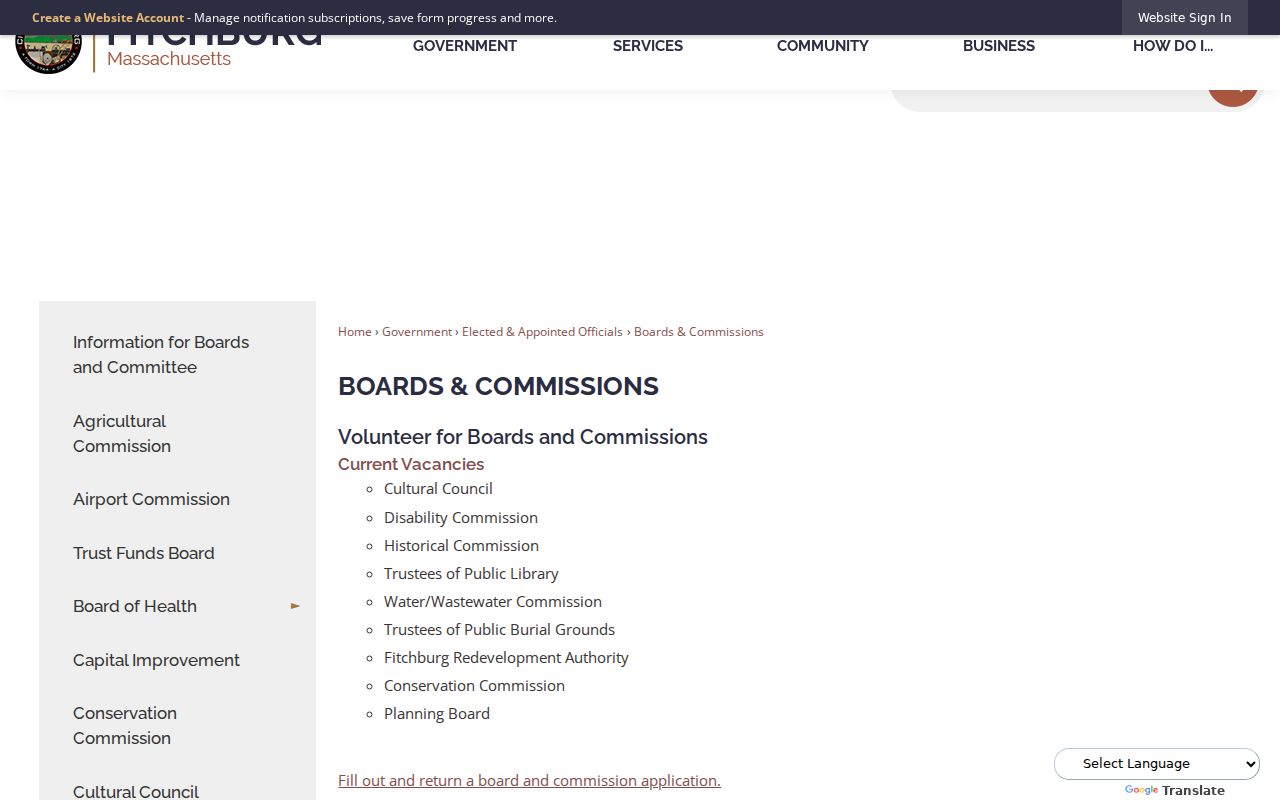
Public boards, agendas, and contact routes can explain who handles a concern affecting a block. They do not identify private households or create a neighborhood name list.
Fitchburg Neighbor Parcel Method
Use AxisGIS Fitchburg as the anchor-parcel tool. Search by street or address, owner name, or map and lot. Fitchburg's configuration uses the parcel format XX-XX-X. Once the anchor parcel is open, use map browse for touching or nearby parcels or run the configured Abutters report at 100 feet. Record the parcel ID, assessed owner, situs, mailing address if shown, zoning or use clue, and the map relation before moving to the next parcel.
The city's service directory helps identify the municipal office when the map points to a question that needs a custodian rather than a new search.
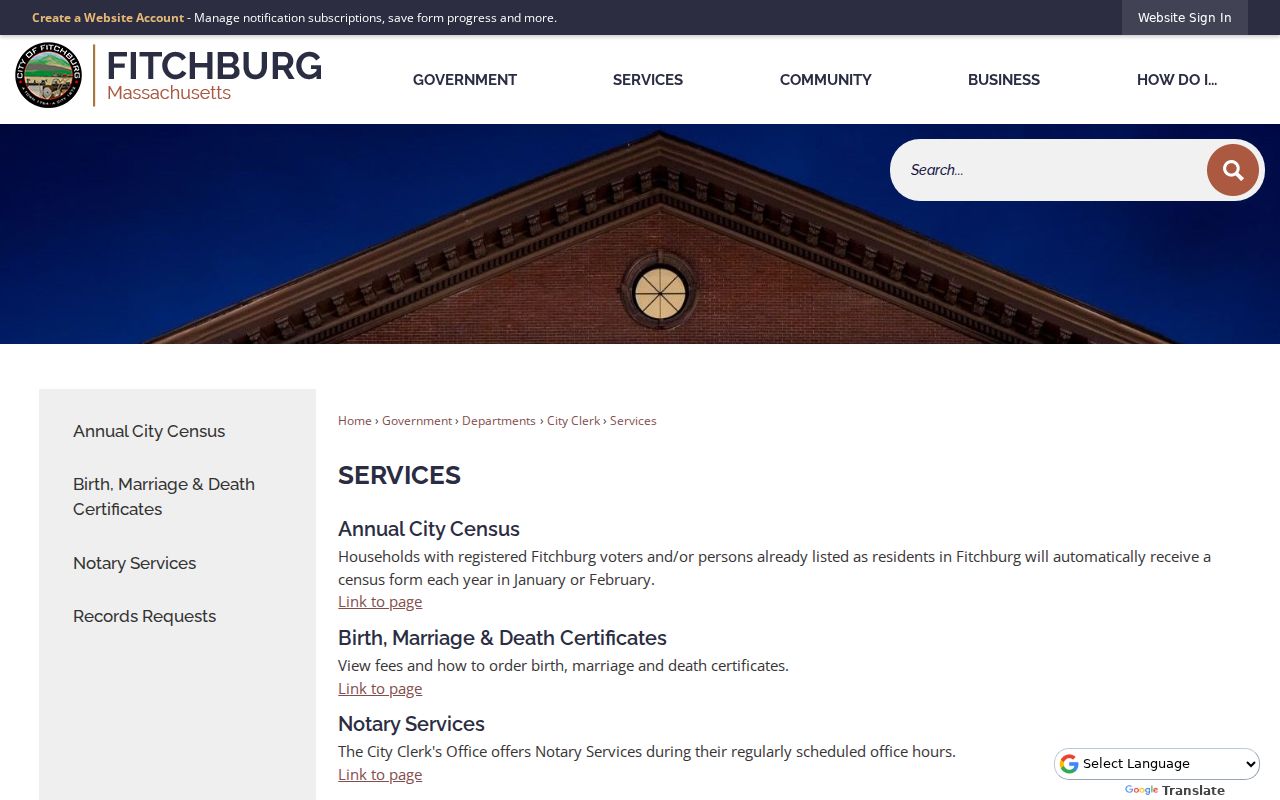
Use the department route for a specific parcel, census, permit, or civic-record question. A map result is a starting point for a focused request, not a replacement for the keeper's record.
- Locate the anchor address in AxisGIS and open its parcel report. Note the map and lot, situs, assessed owner, and legal context.
- Run the 100-foot Abutters report or browse the parcels that touch or sit near the anchor. Keep each parcel as a separate record.
- Read the parcel report and layer context for each lot, then compare recorded deed parties when ownership needs confirmation.
- Use ward, precinct, city census, or civic information only for the limited block question it can answer. For an entire street chain, use the Fitchburg street directory.
AxisGIS reports can export to PDF or Excel. The city describes map data as planning and informational material, so a dashed parcel may still have a valid owner and a legal question belongs with the assessor or Registry.
Fitchburg Neighbor Parcel Context
A parcel is not the same thing as a building, road, or water feature. In the map viewer, parcel lines show tax-property geometry; a building layer shows a footprint; a road can be a right-of-way; and water or wetlands may form part of the visible space without identifying an adjacent owner. Use the layer list to avoid calling a public road, river edge, or separate lot a neighbor parcel. Zoning, FEMA flood, wetlands, contours, watershed, open-space, Census, historic-inventory, and municipal-boundary layers give land context, not household information.
Census QuickFacts for Fitchburg supplies citywide context rather than block-by-block identities.
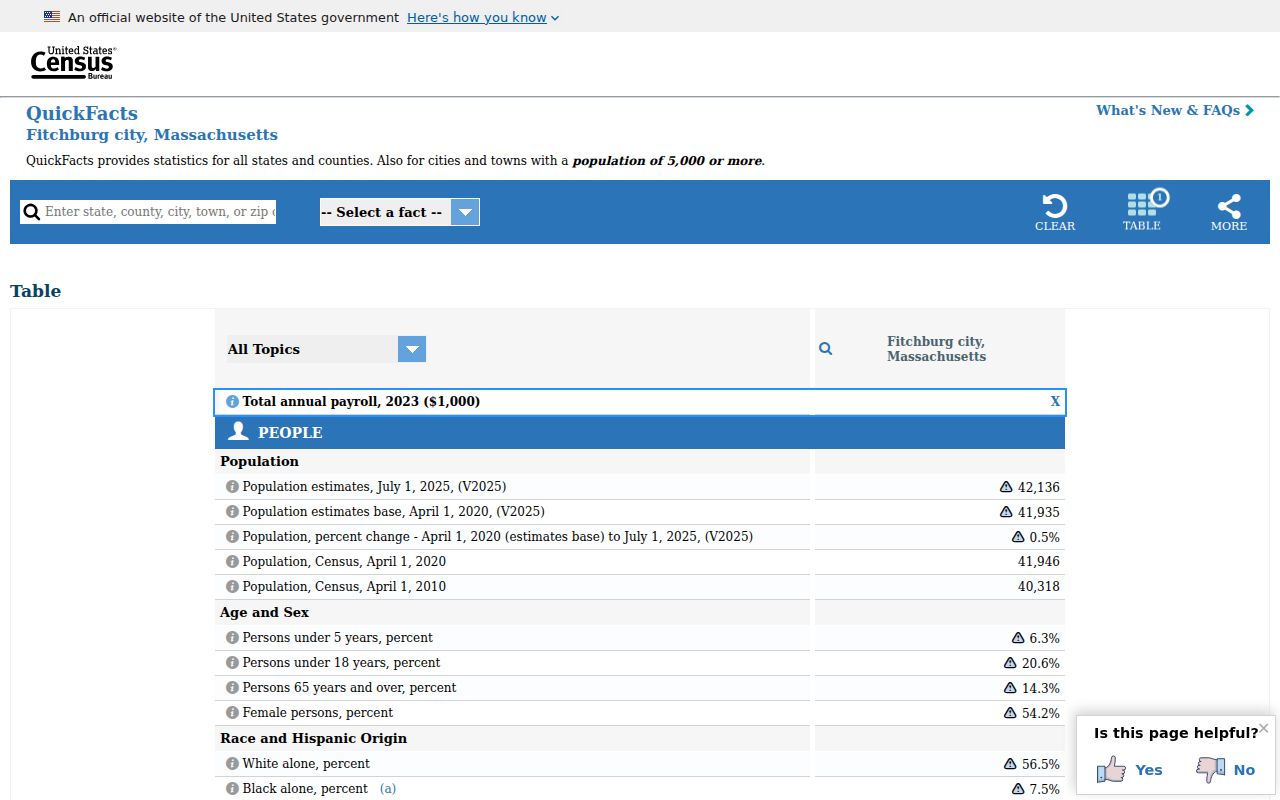
Citywide figures can help explain scale, but they cannot be used to draw conclusions about a particular street or the people who live there. Parcel geometry remains informational until confirmed through the proper record channel.
Note: Map layers explain land and civic geography, not a person's identity, address, or household membership.
Fitchburg Neighbor Deed Checks
When the assessed owner needs confirmation, take the parcel ID, owner name, and legal detail to the Worcester Registry of Deeds. Search a Fitchburg property or party, then read the deed for the parties, recording date, book and page or document number, legal description, plan or lot reference, and prior instrument. The legal description and plan are more durable than a street-number match. Search a former owner as grantee to move backward through recorded ownership.
Fitchburg's historic environment can add a useful check to the legal trail. The city history describes the river, rail corridor, hills, mill areas, and distinct historic sections such as Water Street, Mechanic Street, West Fitchburg, and Cleghorn.
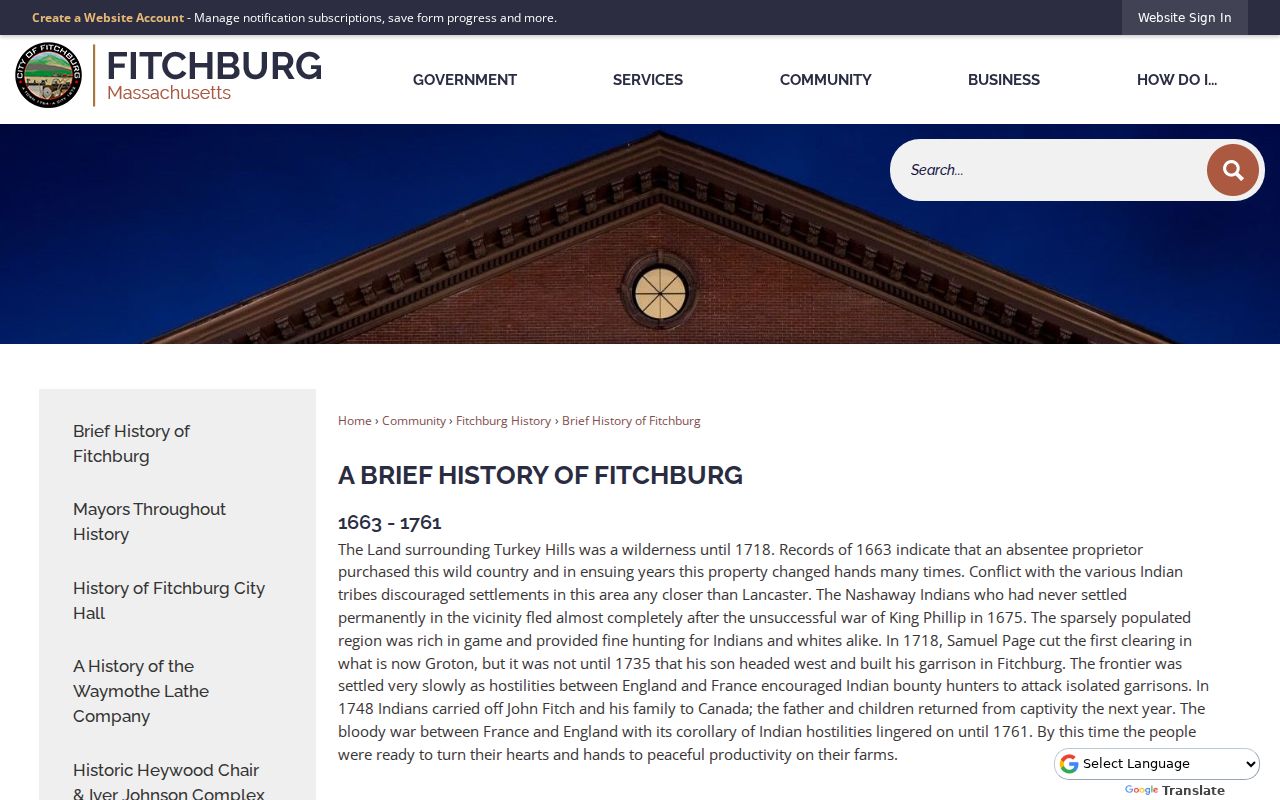
Those historic descriptions help locate a block in the city story. They are not evidence of an individual's identity or a claim about the current people on a street.
Fitchburg Neighbor Voter Limits
The state voter lookup cannot show a nearby-address list. Its form requires the individual's first and last name, full date of birth, five-digit residential ZIP, and agreement checkbox. M.G.L. c. 51, § 64 limits the matching result to registration or pre-registration, active or inactive status, polling location, and state and federal representatives. It does not expose other biographical information and does not support a block surname browse.
The Secretary's voter-information guidance explains that most voter and election records can be requested from local election offices while confidential registration remains available.
For a lawful local street or census request, write to the Fitchburg City Clerk with the record, date range, requested fields, ward or precinct, format, and purpose. Ask about current fees, redaction, delivery, and use restrictions. Ballot choices are secret and are never a block-lookup result.
Fitchburg Community Neighbor Routes
Fitchburg's community layer is institutional, not a public association directory. No current official city-wide neighborhood-association directory or HOA directory was found in the research. The sources identify public contact points and historical resources, but they do not verify a current private membership list. Use them to learn about a local issue, seek historical help, or reach the appropriate public-facing organization.
Cleghorn Neighborhood Center / United Neighbors
Public community-service contact at 18 Fairmount Street. It is a contact route, not a list of nearby households.
Saima Park / Saima Society
A Finnish cultural and historical resource cited in city materials. Use public history sources, not private membership information.
Fitchburg Historical Society
Arthur Lowe Library and Crocker Center support public local-history and genealogy research by visit or appointment.
City boards and commissions
Planning, conservation, library, historic, and civic bodies offer public meetings, agendas, and issue-specific contacts.
The Fitchburg staff directory helps identify the current public department for a records or service question.
Department contacts can point to a records custodian or city service. They should not be used to infer a public official's or a private resident's home address.
Fitchburg Neighbor History Clues
Old records work best when mapped to Fitchburg's geography. The North Nashua River, rail line, hills, and mill complexes shape street patterns. Historic sources describe Water Street, Mechanic Street, West Fitchburg, and Cleghorn as distinct settlement and industry areas. For an older address, pair the current parcel with a historic street guide, deed plan, census enumeration area, newspaper, or Sanborn map instead of assuming a modern block has always had the same layout.
The city contains 19th-century passways and granite steps that connect hillsides and streets. Rapids Passway from Mt. Vernon to Prichard is one documented example. These physical links can make a map look discontinuous and can help explain an older address description without turning geography into a claim about any person.
Note: A block's historic context can guide a records search, but it does not replace the parcel, deed, or custodian record.
Fitchburg Neighbor Tool Comparison
Official sources and commercial neighbor-lookup products answer different questions. Start with the official parcel, deed, civic, and archival record because its keeper and limits are known. A commercial category may combine old addresses and same-name data from mixed sources, may charge for a report, and cannot make sealed or protected information public. It is not a substitute for the actual custodian.
| Source category | Useful for | Key limit |
|---|---|---|
| Official parcel and deed records | Lot relation, assessed owner, legal parties, transfer history | Owner or mailing information does not prove occupancy |
| Official civic and archival records | Ward context, public contacts, history, and targeted records requests | Confidential material and private household data remain restricted |
| Commercial neighbor tools | Possible lead that needs confirmation | Mixed, stale, or same-name data can misidentify people |
Fitchburg Neighbor Lookup Limits
Renters and household members absent from a public record stay outside a parcel search. Protected voters, Address Confidentiality Program participants, DMV addresses, utility and postal-delivery data, school records, private membership information, and sealed or impounded records are not block-search material. A tax mailing address can be an estate, business, trust, or owner elsewhere. Never convert it into a claim about who lives at the property.
Massachusetts Address Confidentiality Program participants may use a substitute address under G.L. c. 9A and 950 CMR 130.00, and courts can impound protected address material under SJC Rule 1:20. Do not attempt to reverse a substitute address. Ask the custodian about a lawful correction or redaction process when a public record is wrong.
Lawful use. Use Fitchburg block records for personal, lawful research and civic context. Do not use them to watch, stalk, harass, or intimidate anyone.