
Fitchburg Previous Residents by Source Era
Past residents of one Fitchburg address leave a trail in sources that overlap but do not cover the same years. Begin with the current parcel so the street number, map or lot reference, and named owner can be compared with a deed. Move to historical sources only after recording those identifiers. The Worcester Registry, State Library, local library, Historical Society, federal census, maps, and newspapers each add a distinct piece. None of them, standing alone, proves every person who lived at an address.
| Source | Years It Covers | Where Held | What It Shows |
|---|---|---|---|
| AxisGIS assessor parcel | Current data labeled 2025 | Fitchburg Assessors | Owner, situs, mailing address, map/lot, values, sales, and building data |
| Registry deed index | Current search plus separate pre-1960 paths | Worcester Registry of Deeds | Parties, instrument, date, book/page or document number, and legal description |
| City and suburban directories | 1848; 1871-72; 1876-85; 1887-1944; 1967; selected suburban years 1906-1977 | State Library and local repositories | Printed name, address, street-guide, and household clues |
| Federal census | Released schedules, 1790-1950 | NARA, libraries, and genealogy institutions | Household, age, relationship, and enumeration-date context |
| Sanborn maps | 1887, 1892, 1897, 1902, and 1936 | Library of Congress | Footprint, material, height, use, street names, and surrounding lots |
| Local newspapers | Sentinel 1839-present; Raivaaja 1905-2009 | Fitchburg Public Library | Notices, obituaries, events, and name variants |
For a recent transfer, use the parcel and deed first. For an older household question, pair a directory year with the nearest released census and use maps or newspapers to resolve an address change. The pace is deliberate because a record that is good for ownership can be weak evidence of occupancy.
Anchor a Fitchburg Address for Previous Residents
Fitchburg AxisGIS is the current parcel starting point and labels its parcel data as 2025. It offers owner-name, street or address, and map/lot searches, with the local parcel format shown as XX-XX-X. A result may show the assessed owner, situs address, tax-bill mailing address, values, sale history, building data, exemptions, and map geometry. Preserve the parcel identifier before moving to the Registry because old deeds can use a legal description or plan reference rather than the familiar street number.
Situs means the physical location of the land or building. The mailing address is where notices are sent and can belong to a trust, estate, firm, or someone elsewhere. Neither field establishes who lives at the property. Likewise, a sale history is a property record, not a list of previous residents. The city map is informational and should be checked with the assessor when a parcel is unclear or dashed.
Fitchburg's map also has parcel, zoning, flood, wetlands, historic-inventory, Census, and municipal-boundary layers. They can help locate an old address, but they are not a legal survey. The 100-foot abutter function is useful for nearby parcel context, not for deciding who occupied a property.
Fitchburg Previous Residents Through Deeds
The Worcester Registry of Deeds portal supplies the backward ownership trail for a Fitchburg address. Its search menu includes Recorded Land Name, Document, Book, Property, Recorded Date, Unindexed Property, and separate Pre-1960 Grantor Index and Pre-1960 Grantee Index choices. The recorded instrument is the important item: it gives party roles, document type, recording date, book/page or document number, and often a legal description, plan reference, consideration, or prior-instrument reference.
- Use AxisGIS to record the current owner, parcel identifier, situs, and any plan or sale clues.
- Search the owner as a grantee in the Registry, narrow the town to Fitchburg, and use a reasonable date range.
- Open the purchase deed and record the seller, book/page or document number, legal description, and prior reference.
- Search that seller as a grantee to find the earlier acquisition, then repeat the process backward.
- When the normal path stops, switch to the dedicated pre-1960 index, unindexed-property path, office terminal, microfilm, or Registry staff.
- Grantor
- The party transferring an interest in a recorded instrument.
- Grantee
- The party receiving that interest. Searching a seller as a grantee can reveal an earlier purchase.
- Chain of title
- The sequence of recorded transfers connected through parties, legal descriptions, plans, and prior references.
- Legal description
- The deed's formal description of land or a plan reference. It can remain more dependable than a changed street address.
A transfer can document a change in legal ownership. It does not prove the date an owner, family member, or any other person occupied the address.
Fitchburg Past Residents Registry Paths
The Registry's separate pre-1960 Grantor and Grantee Index paths are the verified bridge for older Fitchburg deed research. The public landing page does not give one exact earliest online year, so there is no support for claiming that the online deed chain begins in a particular year. When a property search fails, try name variants, spouse, estate, trust, plan or lot references, the legal description, and the recorded town filter. A common surname is best narrowed with Fitchburg and a date range.
The portal also exposes Recorded Land, Registered Land, Plans, Registered Land Plans, and Land Court case-number searches. A plan can explain subdivisions or changing lot lines that make the old number hard to match. Search, viewing, printing, and downloading were free when inspected, while certified office-copy and counter fees were not captured. Registry staff and in-person records are the proper fallback when the online path or image does not answer the question.
Note: An index identifies where to inspect an instrument; the deed image supplies the operative description and recorded party roles.
Fitchburg Past Residents on Sanborn Sheets
The Library of Congress Fitchburg Sanborn collection lists five editions: November 1887 with 17 sheets, March 1892 with 23, February 1897 with 32, 1902 with 60 plus six skeleton maps, and 1936 with 79 plus four skeleton maps. A Sanborn sheet can show a building footprint, construction material, height, use, street name, lot context, and nearby industrial or residential change. It dates the mapped scene, not a person's presence.
Start with the sheet index, then compare the map's street names and nearby intersections with a directory and deed's legal description. The Library of Congress warns that matching a current address to an historic map can be difficult and that index or correction sheets can postdate the volume date. A map result should therefore be recorded with its edition, sheet number, and any correction information before it is used to bridge an address.
Sanborn evidence works best with a dated directory entry, permit, or deed. It can confirm that a structure or street pattern existed, but it cannot tell who lived there without another record.
Fitchburg Past Residents Address Breaks
Older Fitchburg searches can fail because the city's hilly mill and rail neighborhoods grew at different times, not because the address has no history. The Massachusetts municipal-boundary layer documents a Fitchburg-Leominster border correction along Crawford Street, updated from a scanned 1964 Fitchburg DPW survey plan. Keep both municipal labels in the search trail for a border address. Test old street names, intersections, plan or lot references, nearby landmarks, the Sanborn index, and the directory street guide rather than relying only on a current street number.
The city's Fitchburg Historical Research resources point to the FSU Amelia V. Gallucci-Cirio Library Local History Research Guide, the architectural and historical inventory, MACRIS, and address-based historic-property information.
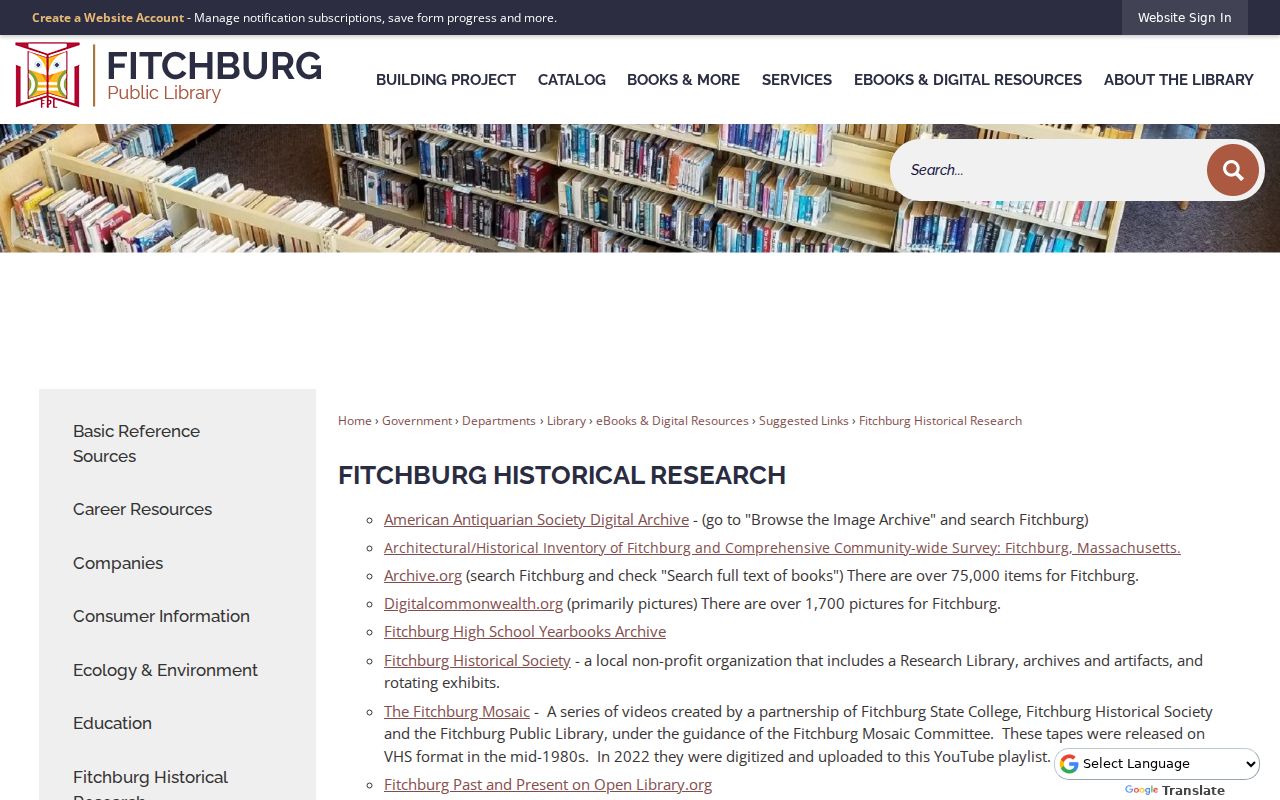
Those sources can explain a building form, district, or historic address context, but they should be paired with a deed or household source before making a claim about past residents.
Fitchburg Past Residents in Directories
Ownership is only one layer of a Fitchburg address trail. The State Library lists city directories for 1848; 1871-1872; 1876-1885; 1887-1944; and 1967, along with selected suburban volumes from 1906 through 1977. Federal schedules through 1950 are released under the 72-year rule. A directory offers an annual or near-annual printed snapshot, while the census gives household composition, age, and relationship at its enumeration date. The historical collections themselves are described in the Fitchburg city directory collections.
The Massachusetts State Library genealogy guide describes the wider set of directories, census records, church and cemetery transcriptions, Archives material, and local repositories.
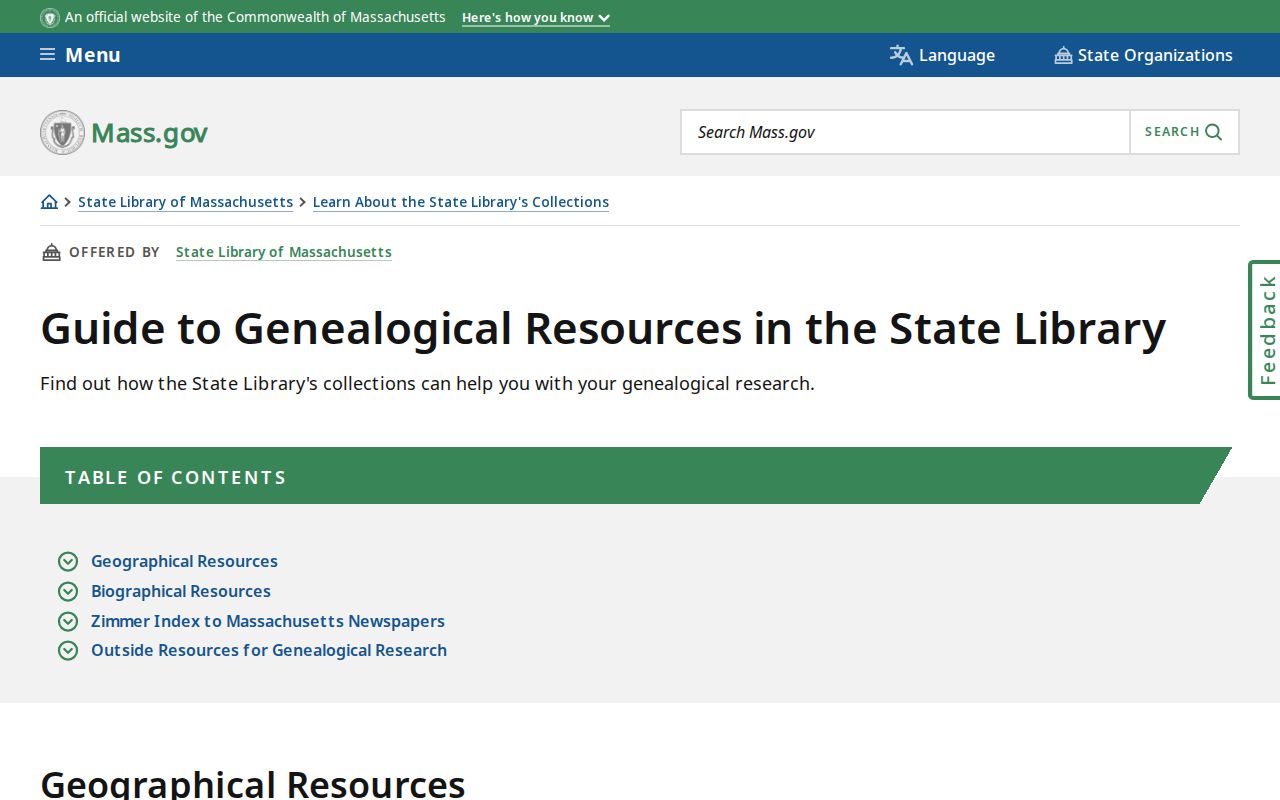
The guide is useful for locating the next institution when a specific city-directory volume or census image is not available at the first stop.
- Record the exact directory year, page, name form, address, and any relationship or work notation.
- Check the street guide as well as the alphabetical listing, because the two sections answer different questions.
- Pair that year with the closest released census, accounting for the census enumeration date.
- Use Sentinel or Raivaaja, deeds, maps, permits, and cemetery material to test a move, death, or changed address.
A directory can omit children, boarders, and others not chosen for the printed listing. A census may use an old boundary. The strongest conclusion keeps both dates visible instead of turning a single entry into a continuous residency claim.
Fitchburg Past Residents at Trail's End
When the dated address trail reaches a death or estate event, use official local sources as confirmation leads. The City Cemetery Division operates six city-owned burial grounds and accepts genealogical inquiries. South Street Cemetery, established in 1766, is Fitchburg's oldest city cemetery and first colonial burying ground. Forest Hill Cemetery administration is at 115 Mt. Elam Road, with inquiry help at 978-345-9578 during its published weekday office hours. The city page does not claim an open public name-search database, so use the inquiry channel for grave, lot, or interment detail.
The Fitchburg cemetery and genealogy information describes the official inquiry route.
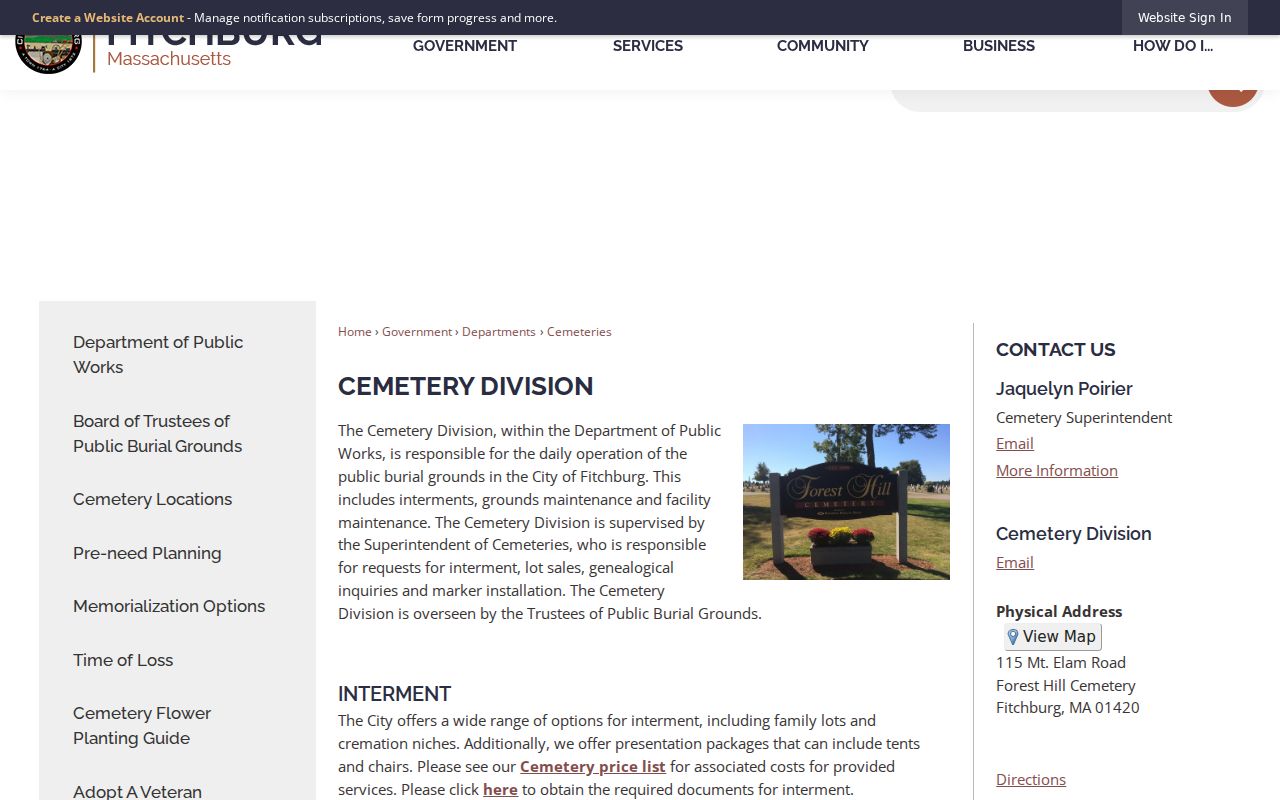
A cemetery response can connect a person to a grave or family context, but it does not by itself establish a prior street address.
Probate matters may be searchable through MassCourts by name, case number, or case type when public, while files and sealed material remain subject to court access rules. A federal court docket has a narrower role: use PACER only when a known federal case is relevant to a party or property question. It is not a Fitchburg address directory and it does not prove residence, probate status, or an ownership chain.
The official PACER pricing and search information explains the federal service's fee and search context.
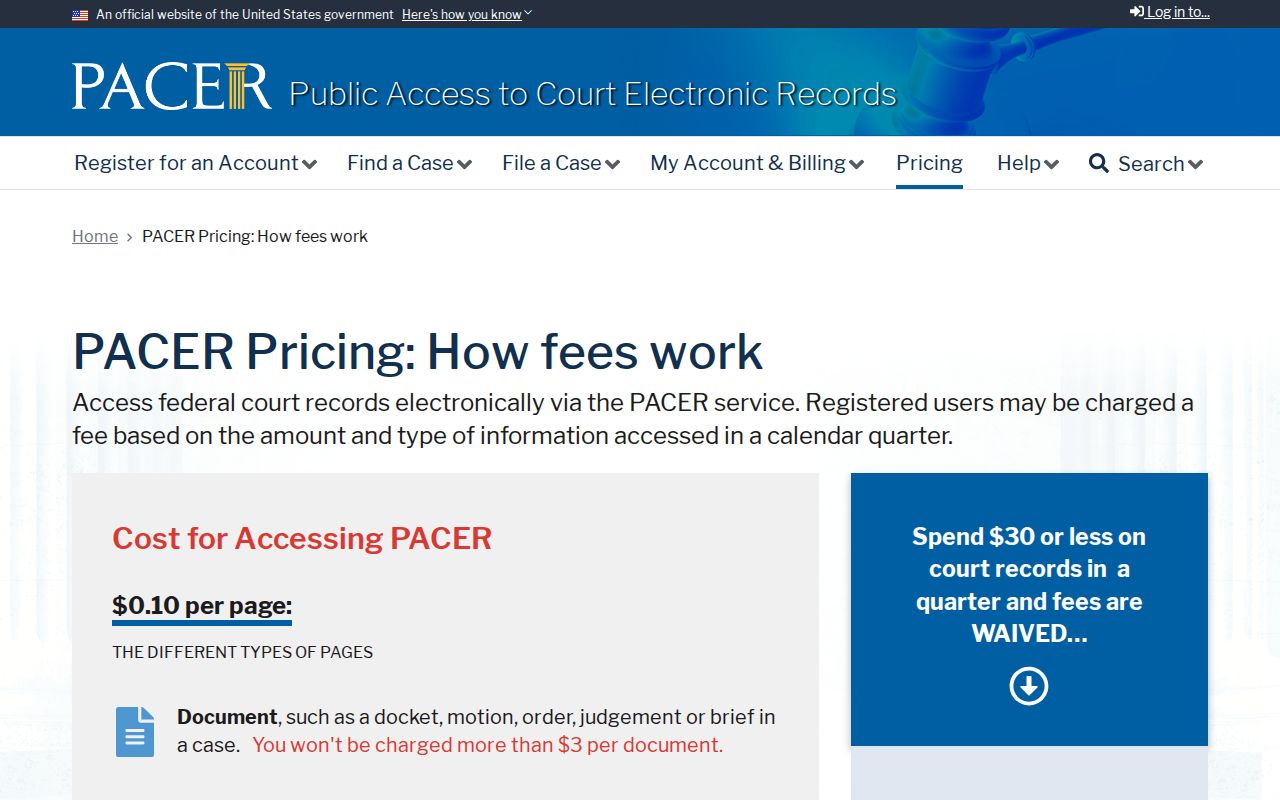
Keep any federal result separate from the local deed, directory, census, and cemetery trail unless the underlying record clearly connects them.
Lawful use. Fitchburg house-history and family-history research should be limited to lawful personal purposes. Do not use address information to stalk, harass, or track any living person.